











Among those on Inman News’ latest list of the 100 Most Influential Real Estate Leaders were some familiar NAR faces, starting with 2013 president Gary Thomas, broker-owner of Evergreen Realty in Villa Park, Calif. I profiled Thomas in the latest issue of REALTOR® Magazine.

Also included on the Inman list was NAR CEO Dale Stinton. For Stinton, the Inman recognition came on the heels of another award: In November he was named Executive of the Year (large organization category) in the Best in Biz Awards. That award recognized the association’s progress in such activities as broadening member engagement at the local, state, and national levels of government through the REALTOR® Party Initiative; creating REALTOR® University; and launching the Realtors Property Resource, a rich national database of real estate property information.

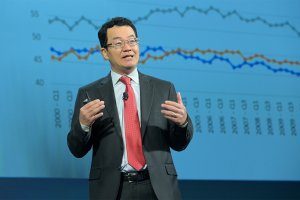
NAR’s Lawrence Yun, senior vice president of research and chief economist, and Nobu Hata, director of digital engagement, also made the Inman 100 list. In addition to being one of the most popular draws at NAR conferences, Yun writes a regular column for REALTOR® Magazine. Hata is a former chair of the magazine’s Young Professionals Network Advisory Board. On seeing the news, Hata jumped on to Facebook to say he share the honor with Heather Elias, director of social business practice for NAR, and Pamela Geurds Kabati, NAR’s senior vice president of communciations. Hata and Elias, both former practitioners, joined the NAR staff at roughly the same time and were hired by Kabati. Hata, the public face of NAR’s social media presence, is frequently on the road to teach social media best practices to NAR members. Elias is behind the scenes ensuring that those best practices and implemented within the organization.

Steven Berkowitz, CEO of Move Inc. and Errol Samuelson, president of REALTOR.com, also made the Inman 100. The list was released Friday, the final day of Real Estate Connect in New York.

Existing-home sales are up 2.1 percent in October from the previous month and home prices are up more than 11 percent from this same time last year, to $178,600. Sales are being driven by strengthening fundamentals—the improving jobs picture, rising rental rates, continuing low interest rates and housing affordability—and prices are gaining on reduced supply.

NAR Chief Economist Lawrence Yun said yesterday in his national press conference in Washington to release the association’s latest sales figures says inventory shortages are cropping up in markets across the country. Although that’s good for home price gains in the short-term, in the long-term it’s a negative that reflects weak home construction by builders. Ideally, supply growth will increase to provide a healthy counterbalance to demand so prices can rise at a sustainable pace.

In any case, due to the steady price gains home owners have seen, total home owner equity has risen by $760 billion so far this year. Should home prices rise 5 percent for the year, equity gains could reach $1 trillion by year’s end, a healthy development for the economy, Yun says.

Yun talks about the latest home sales figures and looks ahead to 2013 in the video above of his press conference.

Access NAR’s press release on the latest home sale numbers.

Tagged with:
 

NAR’s forward-looking pending home sales index showed a very small rise in September, just 0.3 percent, but it’s one more data point to suggest the recovery is solidly underway even if it remains modest.

The rise represents the latest in a string of about half a dozen months in which pending sales have moved in a very narrow band, and that’s really what’s most informative about the latest release: it suggests that the underlying factors in the improved market are systemic and not due to just one or two transient factors.

In an interview yesterday, NAR Chief Economist Lawrence Yun said he expects home sales to be 10 percent higher than in 2011 at the end of the year, which would put home sales at close to 5 million, and prices to continue rising. Right now they’re at a median $183,900 on a national basis.

Thanks to slow but steady job growth, the improved market is expected to carry into 2013. “I wish job creation could happen much faster, but nonetheless [there’s been] nearly 5 million job creation and this is supporting the housing market this year and it will continue to support it next year,” he says.

Yun also said rising rents are helping to bring new buyers into the market. He cited NAR’s latest member survey in which 60 percent say they see rents rising in their markets, compared to 10 percent who see rents falling. That rental rate outlook should convert some renters into buyers in the coming months. “It’s a rising trend, and when the rents rise, that means that some of the renters will want to become owners, so there will be additional stimulus for the home sales,” he says.

In the 2-minute video above, Yun talks about the latest pending sales figures. Pending sales are based on contract signings, not transaction closings, so they’re considered a leading indicator—that is, they point to where sales are expected to be 2-3 months down the road.

Tagged with:
 

Signs continue to come in that the housing market is seeing slow but steady improvement, although overly tight lending standards continue to hold back the market given the amount of pent-up demand that’s out there.

Existing-home sales increased 2.3 percent in July from a month earlier to a sales pace of 4.47 million. The new pace is more than 10 percent above where it was at this time last year.

And the median home sales price is up significantly as well, to $187,300, or 9.4 percent higher than this time last year, although NAR Chief Economist Lawrence Yun in his monthly press conference in Washington yesterday attributed the gain to an increase in sales of high-cost homes. Sales of homes at the $100,000 or less price point declined nationally, reflecting the continuing shortgage of distressed and other inventory in markets around the country.

The trend is in the right direction, and given the constraint buyers face in obtaining financing, the growth in volume and in price is encouraging. But the picture could be considerably brighter, Yun thinks, if lenders returned to more normal underwriting standards–that is, standards that were in place for years prior to their loosening in the housing bubble years. As it stands, lenders have tightened way too much in response to the market excesses several years ago.

“Housing could easily be much stronger without these abnormal frictions.” he said in his statement released with the latest sales figures yesterday.

You can view his press conference in the 4-minute video above.

Tagged with:
 

Jamaican sprinter Usain Bolt captivated audiences with his speed and charisma during the 2012 Summer Olympics. You may have noticed “The Fastest Man in the World” slows his steps ever so slightly when approaching the finish line during his individual events, confident that he had clinched the win.  But in the team relay, he never let up as he ran full speed through the finish line.  NAR Chief Economist Lawrence Yun attributes this to the team-mentality. Studies have shown that athletes often perform better in a team environment, he said.

REALTORS® also belong to a team, and consequently should work for the betterment of the industry and attainability of home ownership, Yun said during the economic update at the NAR Leadership Summit in Chicago Tuesday. Despite the fact that the economy is growing, the nation’s mobility rate has slid and owner-occupied sales are still stalled. Thus, the teamwork of REALTORS® is needed more than ever.

“Once you have the baton, you have to be the fastest runner in your association,” Yun said to the audience of REALTOR® association leadership and staff executives. “We have to get America moving again.”

Existing home sales came in at a seasonally adjusted annual rate of 4.37 million in June, up 8 percent year-over-year. Investors coming into the market account for many of those sales, but Yun called the growth “only a slight increase compared to what it could be.” Investors are needed, but Yun said he wants to see less hindrance for owner-occupied buyers, such as reevaluating the stringent underwriting standards from lenders that have been a stumbling block preventing buyers from entering market. Continue reading »

Pieces are in place for housing to continue on its road to recovery but there remain plenty of uncertainties that can derail the market, NAR Chief Economist Lawrence Yun said at a conference earlier this week.

Sales flat. Click to enlarge.

Yun told more than 800 attendees at the CRE Finance Council annual conference in Washington on Tuesday that for the last four years home sales have been essentially flat, at roughly 4.2 million homes, but NAR is forecasting a solid increase by the end of this year to about 4.6 million sales.

High affordability. Click to enlarge.

The reason: affordability remains at an all-time high, interest rates remain low, foreign buyers and investors remain interested in residential real estate, and the U.S. economy is strengthening, albeit modestly.

At the same time, corporations continue to sit on strong profits, the stock market is still heading up, and inflation remains relatively subdued. What’s more, pent-up demand continues to build and rentals are getting pricier. Home prices nationally have appeared to stabilize and all major home price trackers show prices going up in many areas, a trend that should help boost confidence among buyers and sellers.

Hefty profits. Click to enlarge.

All of these are positives, but there remain challenges holding back a more robust recovery in the housing market. Aside from continuing concerns over the financial health of Europe and other parts of the world, the improvement in the U.S. economy remains modest at best, job gains still have a long way to go before the U.S. makes up for the 8 million jobs lost during the recession, home mortgage lending remains tight, and the federal budget deficit continues to weigh down on the country’s prospects.

Risks to growth. Click to enlarge.

The other area of uncertainty is what Washington will do. Until the real estate industry gets clarity on the rules and legislation coming down the pike in the next year, lenders are unlikely to restore their underwriting standards to something more normal. For example, the qualified residential mortgage (QRM) rule: will regulators publish a rule next year with a minimum downpayment requirement on “safe” loans? Will other provisions implementing the massive Dodd-Frank Wall Street reform law from two years ago chill lenders’ willingness to lend? What tax law changes, if any, will Congress talk about over the next year?

Then there’s the massive federal tax expenditures expiring at the end of this year. How Congress handles these $4 trillion or so in provisions could have a major impact on how well the economy does.

The bottom line: Despite all the favorable pieces in place for a meaningful housing recovery, the economy continues to be beset by uncertainty, and that’s leaving it an open question how much the housing market can recover in the next year.

Access all of the slides Yun presented at the conference.

Tagged with:
 

The Wall Street Journal today says the housing market nationally is bottoming out, the essential first step before it can start rising again. But the Journal is a little pessimistic that the upward bounce is coming any time soon. It says the market could drag along the bottom for a while, thanks in part to the uncertainty over how banks’ “shadow inventory” will be handled over the next few years and the continuing trouble borrowers are facing getting financing.

“There are more signs than there were a year ago that housing isn’t getting any worse,” the paper says, “and that it may slowly be getting better.”

But how slowly? The Journal says prices nationally are still falling. It cites February data from CoreLogic that prices fell 2 percent from a year earlier. Recent Case-Shiller data also show prices continuing to fall. NAR data, which draws directly from MLS data, differs from these two data sets. In February it showed prices with a slight, 0.3 percent gain, and in March with a more substantial 2.5 percent gain. These figures take into account distressed sales, which comprise about a third of all existing-home sales today and have a dampening effect on prices, so price gains would be higher if these sales were taken out of the data.

Time will tell which data set is more accurate. Several months will need to go by before we can look back and see what’s actually happening today with prices, but in any case, NAR Chief Economist Lawrence Yun is optimistic about what the market will look like later this year.

First, distressed homes are getting snapped up by bargain hunters, both investors and owner -occupants. That softens the impact that banks’ shadow inventory will have on markets in the months ahead as more properties are released. Second, inventory levels are down to six months, which historically has been the level at which prices stabilize.

To be sure, inventories have been down to six months only for a short amount of time, so it’s too soon to say there’s a trend here. But if inventories stay down at this level for several more months, the stage could be set for better news on prices.

One point made by the Journal that is certainly the case is the continuing trouble borrowers are having getting loans. As the paper says, banks are maintaining tight credit standards in part because of their concerns that Fannie Mae and other secondary market entities will make them buy back any loans that go bad. So, their standards are ratcheted up, and that’s causing even creditworthy borrowers headaches.

It’s safe to say that, until the difficulty of getting financing eases back to a more normal level, even today’s brightening picture can’t be taken for granted, and the Journal’s concerns about a prolonged stay at the bottom could prove true.

Tagged with:
 

Existing-home sales last month were down slightly but they remain at about a 4.6 million level, as they have since January, so if that level holds for the remainder of the year we could see a strong 2012, NAR Chief Economist Lawrence Yun said at a press conference in Washington today.

The relatively strong performance this first quarter stems from the improving economy, Yun said. But it also has to do with the pent-up demand that’s been building for the last several years. At some point, people doubling up or living with parents will start forming households, as they always do when the population increases, and many of these households will buy. Yun thinks we’re seeing signs of this now.

Along with the relatively high level of sales, inventories are down, which helps on prices, and that’s reflected in the numbers. The national median home price is up more than 2 percent from last year.

It’s possible larger homes are being sold (normal for this time of year), so that could account for some of the price increase. But also distressed sales as a percentage of the market are starting to decline. So, that could be having an impact on prices, too.

All in all, despite the slight dip in volume, the picture looks relatively good going into the spring buying season.

More.

Tagged with:
 

NAR released its latest pending home sales index figure last week and for the second month in a row the index is up. But more than that, the index has broken 100. This is significant because the only time since the housing boom collapsed that the index has broken 100 is when the home owner tax credit was in effect. The fact that the index has returned to that level a year since the credit has been in effect means the housing market is strengthening completely on its own, without any stimulus.

NAR Chief Economist Lawrence Yun is upbeat about 2012 because in a number of areas indicators are pointing upward. Not only are home sales up but housing starts are up and home prices are stabilizing in many markets and heading up in some. In areas where they’re still down, the declines aren’t that great. More fundamentally, broader U.S. economic signs are looking positive, including the all-important jobs picture. About 100,000 job are being created a month, and that could rise to 150,000—still not a quick enough pace to get us back to where we were before the downturn but the headwinds are in the right direction.

In the video, Yun talks about what the latest figures mean.

Tagged with:
 

NAR Chief Economist Lawrence Yun told Nightly Business Report anchor Suzanne Pratt yesterday that the association’s rebenchmarking of existing-home sales (EHS) data, which it released yesterday, only affects the number of home sales as tracked at the national level and has no impact on the number of sales tracked at the local level and no impact on the issue consumers care the most about: the value of their home.

Yun says the association’s method of tabulating sales nationally is based on the number of sales recorded by local MLSs and then run through a calculation that adjusts for the percentage of for-sale-by-owner (FSBO) transactions and other variables. Starting in about 2007, the number of FSBOs dropped significantly, as home owners that would have otherwise tried to sell their house on their own turned instead to real estate agents to help them.

Those additional sales were captured by the local MLSs but should not have been counted by NAR, because its tally had already factored in a certain percentage of FSBO transactions.

“What happened during the downturn was that the for-sale-by-owner market got crushed,” he said.

Yun said he expects both sales and prices to improve in 2012, and nothing in the rebenchmarking has any impact on either of those. “We are beginning to see an underlying trend where buyers are coming into the market and correspondingly inventory levels are falling, and inventory levels need to fall before prices can stablize,” he said.

Above excerpt:

More on the rebenchmarking.

The clip above excerpts about two minutes of the Yun interview with Pratt. The full interview, which runs about four minutes, is on the Nightly Business Report website.

Tagged with:
 

Looking for something?

Use the form below to search the site:

Still not finding what you're looking for? Drop a comment on a post or contact us so we can
take care of it!

Visit our friends!

A few highly recommended friends...